Beyond Chatbots: How to Build 2026’s AI-Driven Customer Experience (Without Killing User Trust)
You’ve seen the headlines. By 2026, the AI for customer service market is projected to hit $47.82 billion.
You’ve seen the headlines. By 2026, the AI for customer service market is projected to hit $47.82 billion.
But here is the reality check: Forrester predicts that one-third of brands will erode customer trust this year by deploying "hollow" AI self-service tools just to cut costs.
For indiehackers and SaaS founders, this is your competitive moat. While big incumbents are frustrating users with rigid bots, you can win by building Agentic Workflows—AI that actually solves problems instead of just pointing to a FAQ.
Here is how to optimize your business for the 2026 CX landscape.
1. Move from "Chatbots" to Agentic Workflows
The "conductor" of your CX symphony in 2026 isn't a static script; it’s an AI Agentic Workflow.
Unlike traditional bots, these agents use real-time data to autonomously make decisions. Instead of saying, "I found an article on refunds," an agentic workflow can:
- Verify the customer’s billing status.
- Cross-reference your refund policy.
- Initiate the API call to Stripe.
- Update the CRM—all without a human touchpoint.
Practical Example: If a user’s API integration fails, the agent doesn't just send a link. It analyzes the error logs, suggests the specific line of code to fix, and offers to restart the server.
2. The Multi-Language Advantage
In a globalized SaaS market, English-only support is a growth bottleneck. Data shows that building a Multilingual Knowledge Base is no longer a "nice-to-have."
To scale without a massive support team:
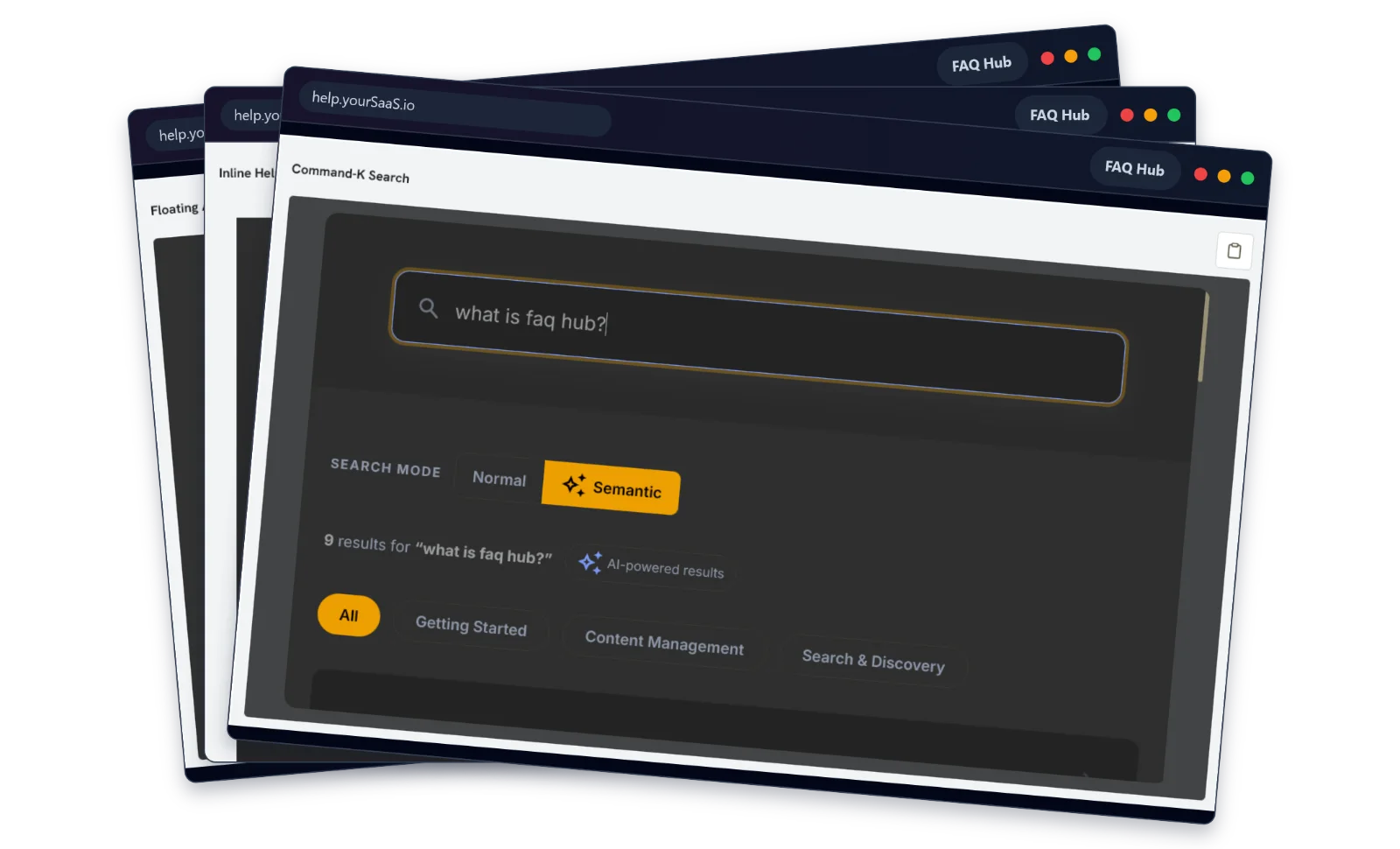
- Use Semantic Search: Move beyond keyword matching. Tools using semantic fingerprinting (like Cortical.io) understand that "done deal" and "contract signed" mean the same thing, regardless of the language.
- Auto-Translation with Human Nuance: Use LLMs to localize content, but focus on "Translation Memory" to ensure technical jargon remains consistent in Japanese, German, or Portuguese.
3. Avoid the "Self-Service Trap"
Qualtrics research shows that 1 in 5 consumers see zero benefit from current AI support. To stay in the winning 80%, avoid these common founder mistakes:
- The "Dead-End" Loop: Never let an AI agent be a cul-de-sac. Every interaction must have a seamless "Bot-to-Human" handoff where the human agent receives a full summary of the AI’s work so far.
- Internal Jargon: If your knowledge base is organized by your internal product modules rather than customer goals (e.g., "Billing" vs. "How do I pay?"), your SEO and user satisfaction will tank.
4. Optimize the Journey for 341% More Conversions
Customer journey orchestration isn't just for support; it’s your best sales tool. Case studies show that optimizing "Mobile Journey Orchestration" can lead to a 203% increase in applications and a 341% boost in conversions.
The 2026 Framework:
- Identity Stitching: Recognize the user across your docs, your landing page, and your app.
- Predictive Support: If a user visits your "Cancel Subscription" page twice, trigger an AI agent to offer a personalized discount or a 1-on-1 strategy call immediately.
5. "Show Your Work" to Build Trust
To earn data trust in 2026, you must be transparent. Don't just collect feedback; close the loop.
When you update a feature based on AI-analyzed support tickets, tell your users: "You told us X was frustrating. We listened. We made change Y." This turns a one-way extraction of data into a bi-directional relationship.
The Bottom Line
AI in 2026 is about competence, not just speed. For bootstrapped founders, the goal is "Extreme Vendor Reduction." Use one unified platform to handle your knowledge base, your agentic workflows, and your journey analytics.
Ready to scale? Don't just automate to save money. Automate to create a "harmonious symphony" that keeps customers coming back.